MySecretStash
Case Study
PROJECT OVERVIEW
Observation & Understanding
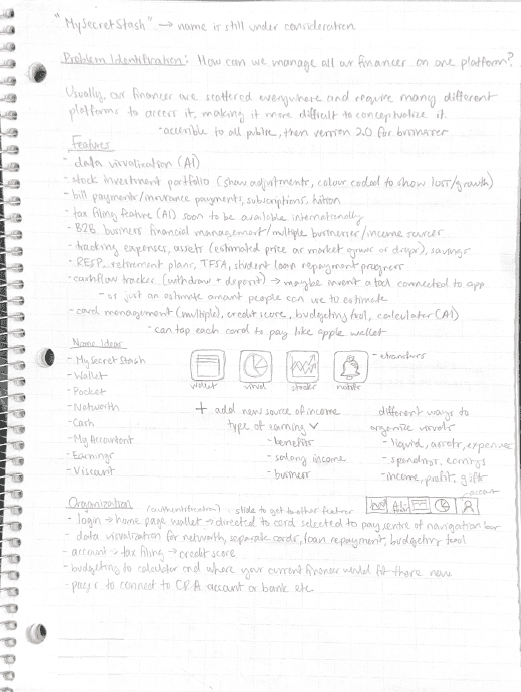
MySecretStash is a conceptual fintech mobile application designed to simplify how users manage their financial lives in one centralized platform. The idea originated from a personal frustration: modern banking experiences are fragmented. Users often rely on multiple applications to complete essential financial tasks such as budgeting, paying bills, monitoring credit scores, filing taxes, tracking investments, and managing debt.
I wanted to design an experience that reduced financial complexity by creating a unified ecosystem where users could:
Monitor all financial accounts in one dashboard
Pay recurring bills and subscriptions
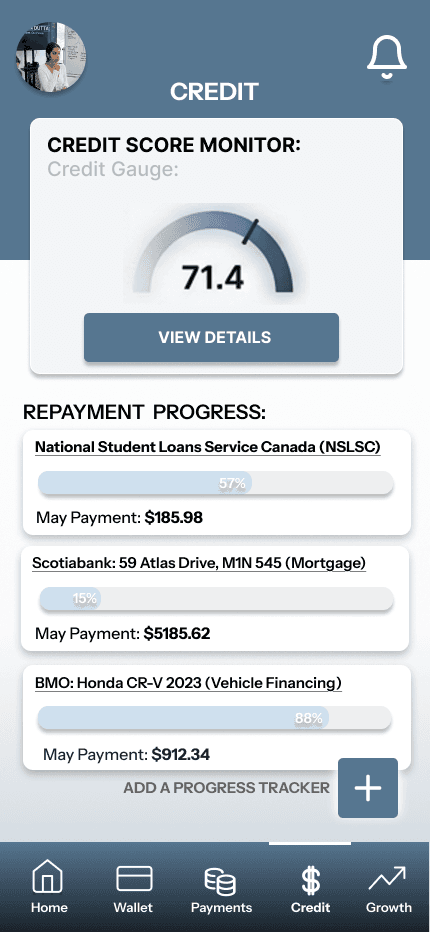
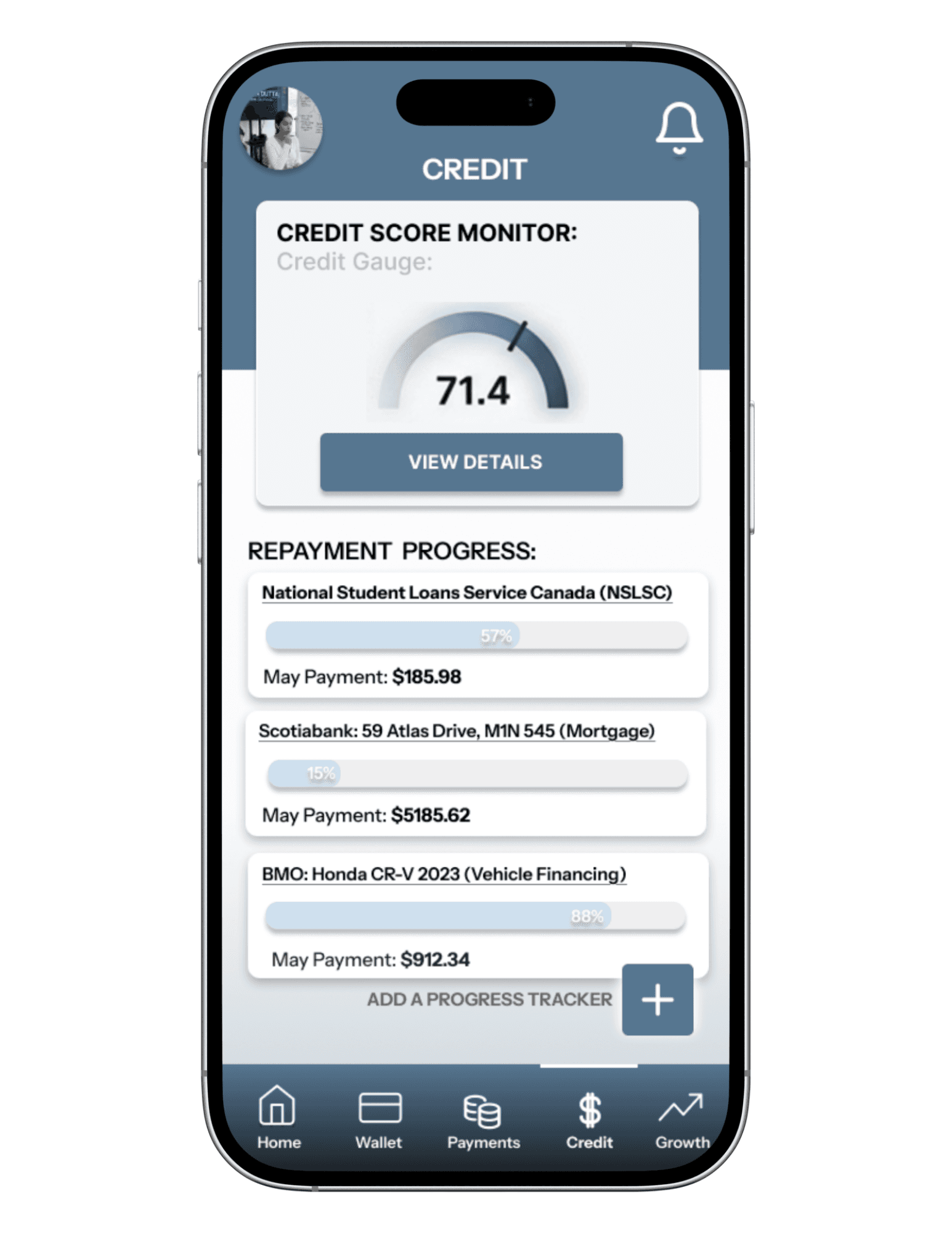
Track credit and debt repayment
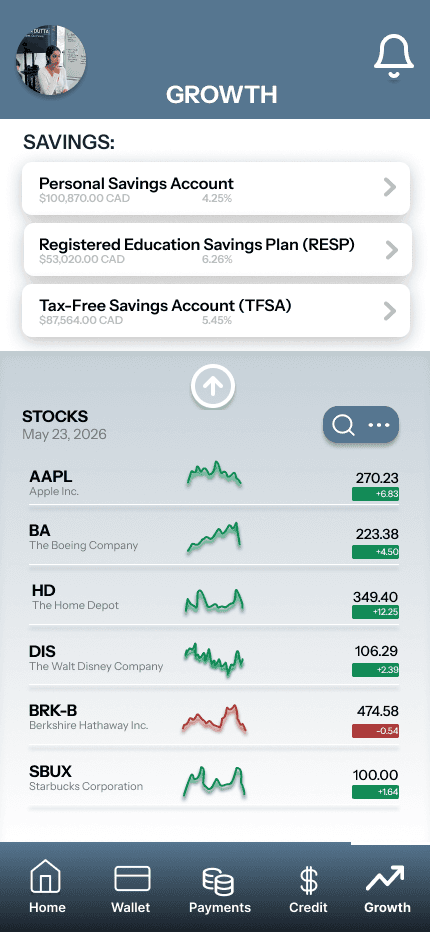
Manage savings and investments
File taxes directly within the app
Understand financial health through visual analytics
The goal of the project was to explore how UX design could improve financial accessibility, transparency, and confidence for everyday users.
Core Features
Financial dashboard
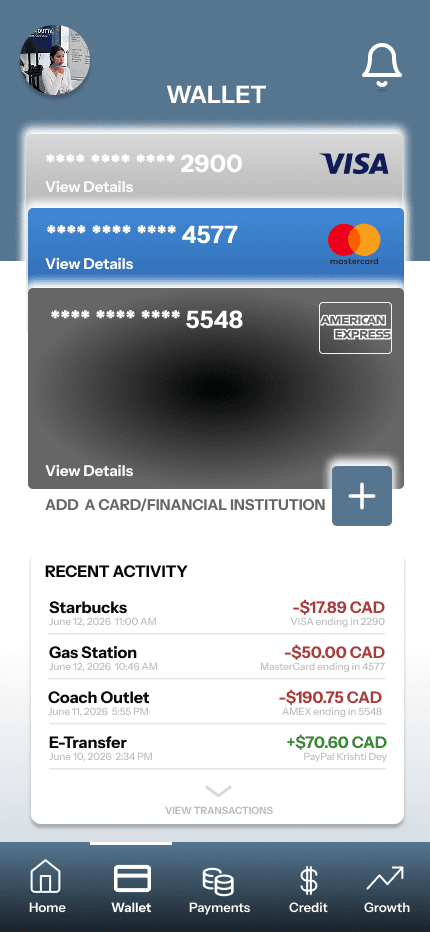
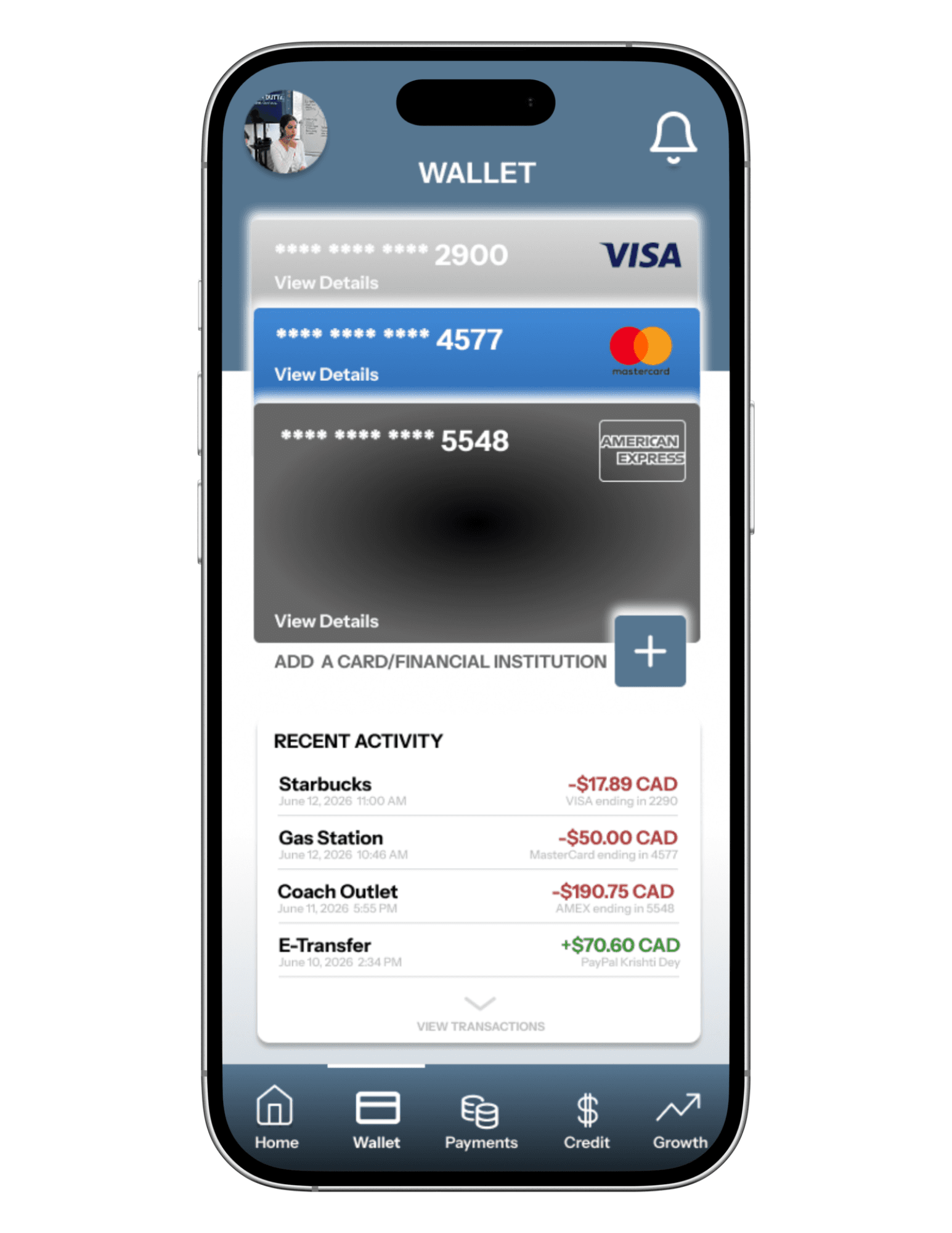
Wallet & transaction tracking
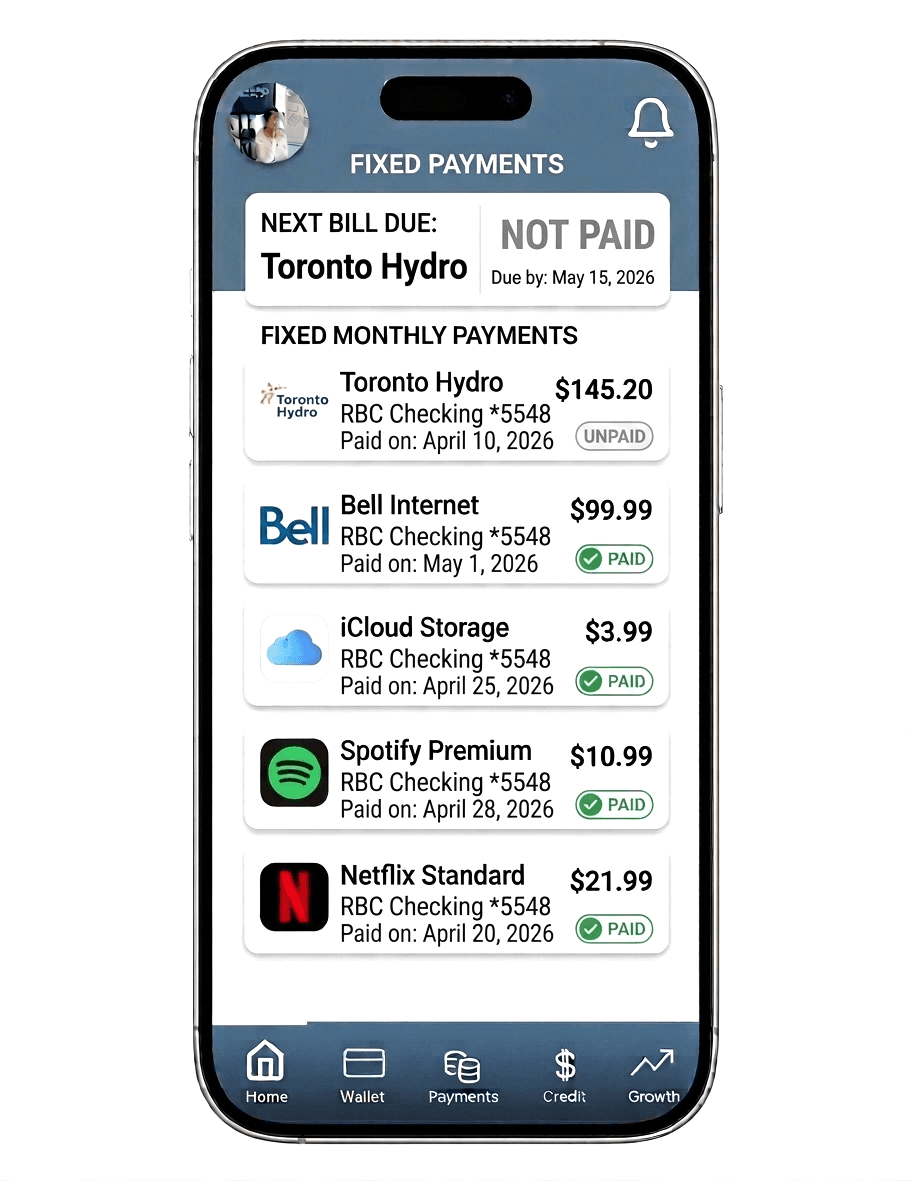
Fixed bill payments
Credit monitoring
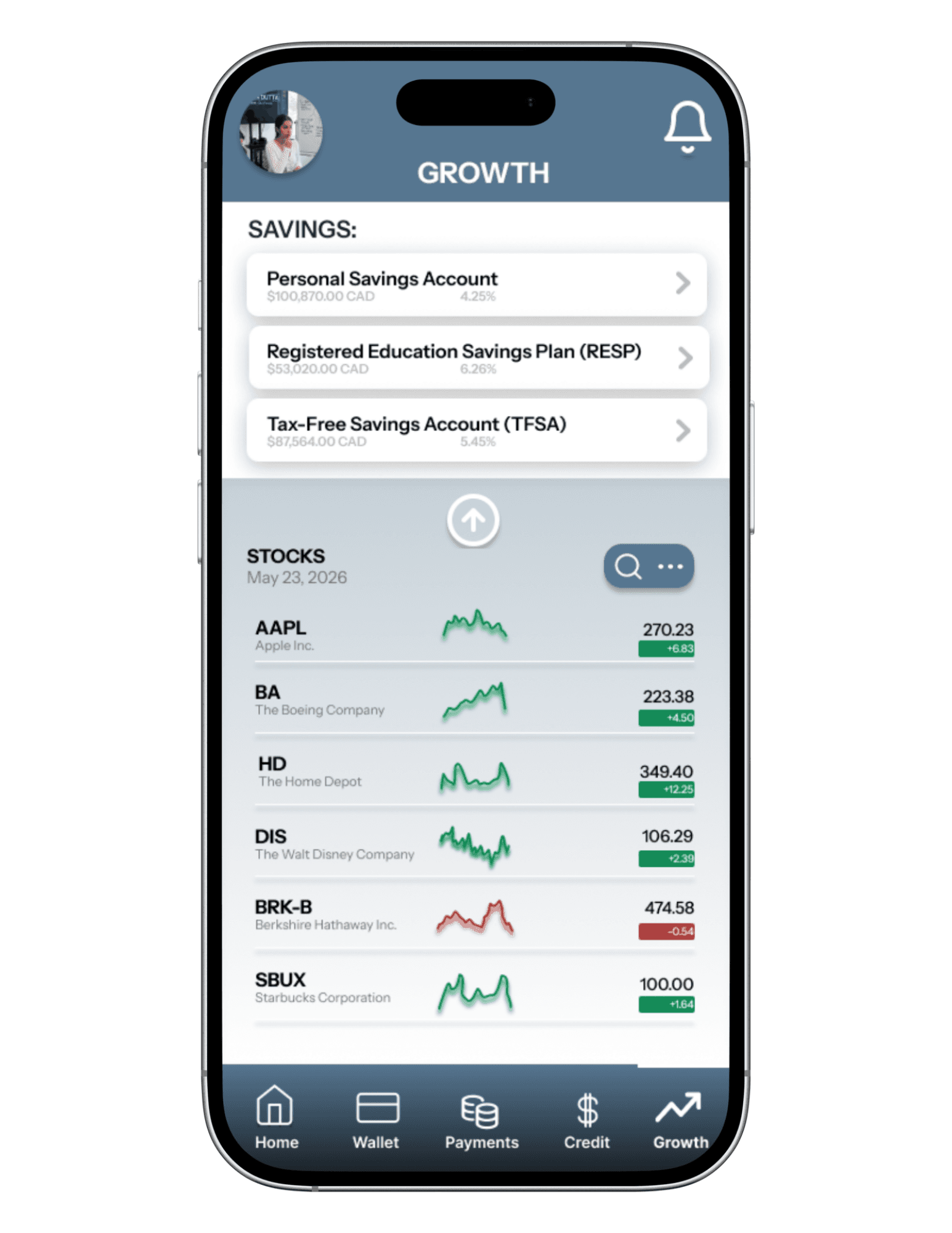
Savings & investment tracking
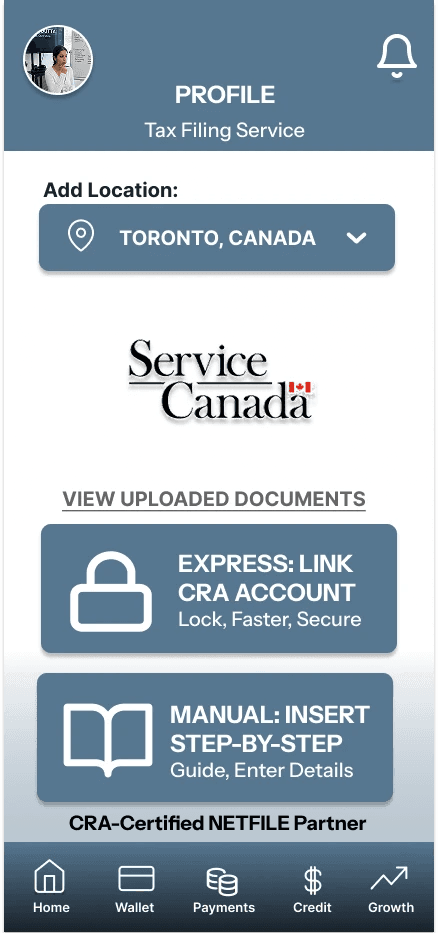
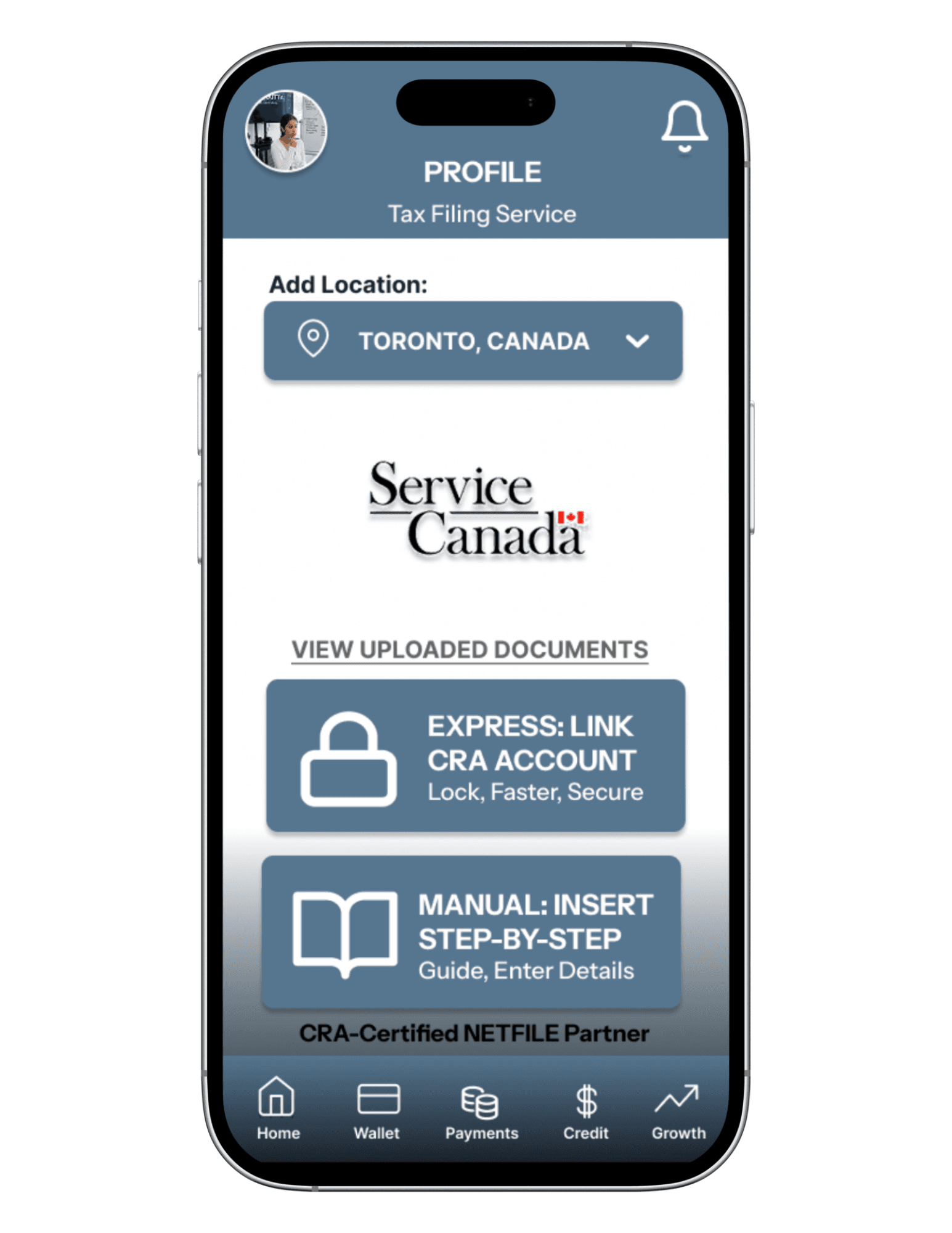
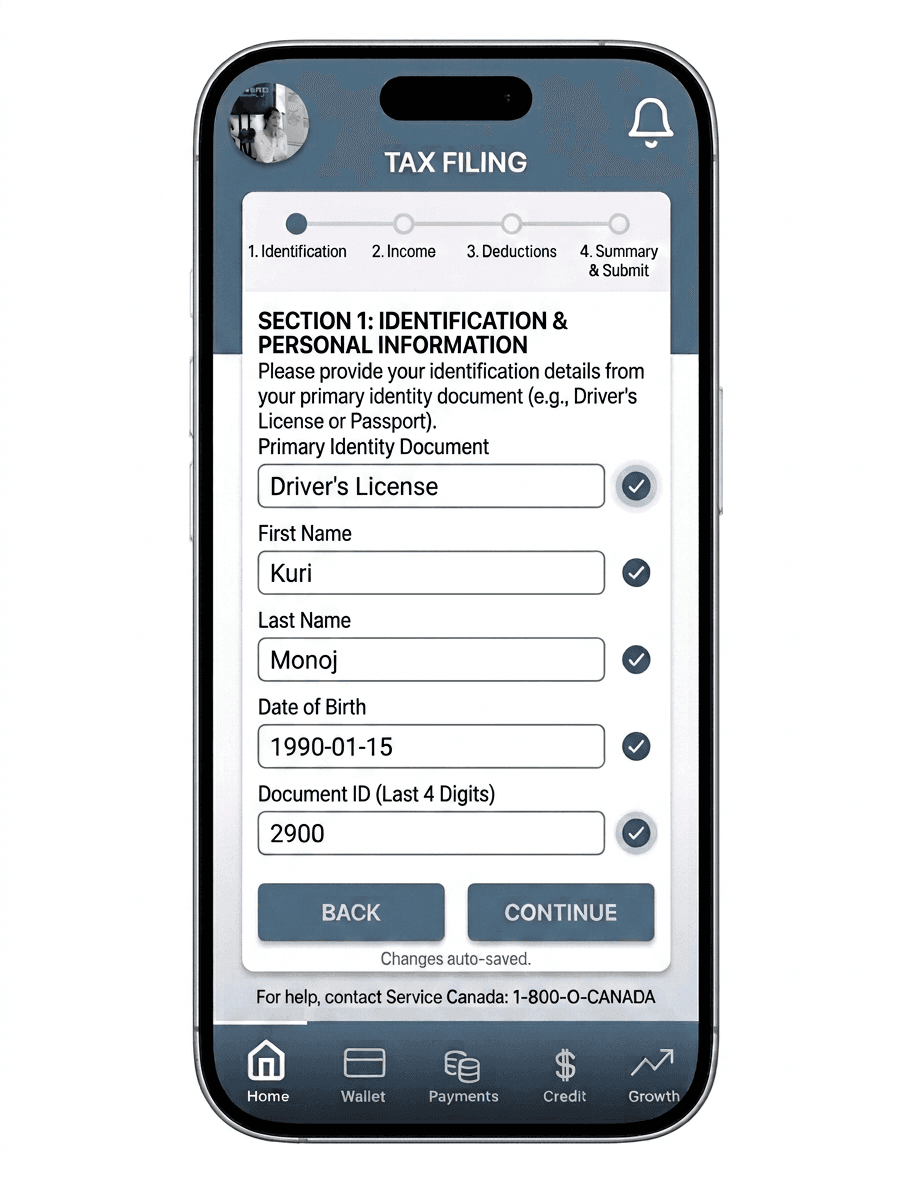
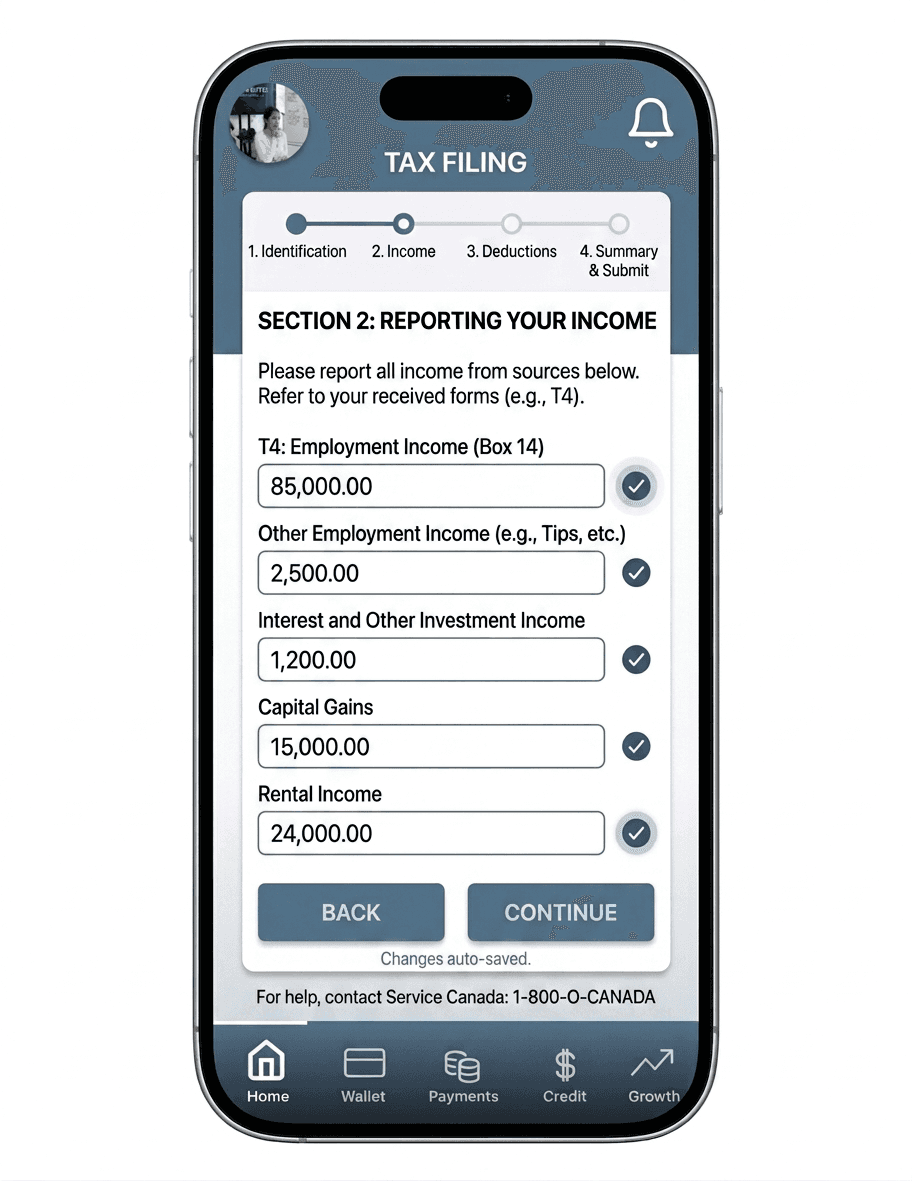
Guided tax filing
RESEARCH & INSIGHTS
Methodology
Research Goals
The research phase focused on understanding:
How users currently manage finances
Pain points across existing financial tools
Behaviors around budgeting and debt management
Emotional responses tied to financial stress
Expectations for an all-in-one financial application
I conducted competitive analysis on products such as Mint, Wealthsimple, Credit Karma, RBC Mobile, and TurboTax. I also interviewed 8 participants between ages 22–40, including students, freelancers, and working professionals.
Key Insights
Users relied on 4–7 apps to manage finances
Financial management created stress and confusion
Users wanted better budgeting visibility
People frequently forgot recurring payments
Tax filing felt intimidating and overly complex
One major theme emerged:
Users wanted a single place to understand and control their financial lives.
Key Findings
1. Users feel overwhelmed by multiple platforms
Most participants used between 4–7 apps to manage finances.
“I constantly switch between apps just to understand where my money is going.”
2. Financial management creates anxiety
Participants associated budgeting and taxes with stress and confusion.
3. Users want automation and reminders
Participants valued automated bill reminders, payment tracking, and progress visualization.
4. Users struggle to understand financial progress
Many participants had difficulty understanding:
Spending habits
Debt repayment progress
Savings growth
Investment performance
5. Trust and security heavily influence adoption
Participants emphasized the importance of:
Clear interfaces
Transparency
Security indicators
Familiar financial patterns
DEFINE
Problem Statement
Young professionals struggle to manage finances efficiently because financial services are fragmented across multiple platforms. This creates cognitive overload, reduces visibility into financial health, and increases stress.
Design Challenge
How might we create a centralized financial experience that simplifies payments, budgeting, savings, credit tracking, and tax filing while maintaining trust and accessibility?
IDEATE
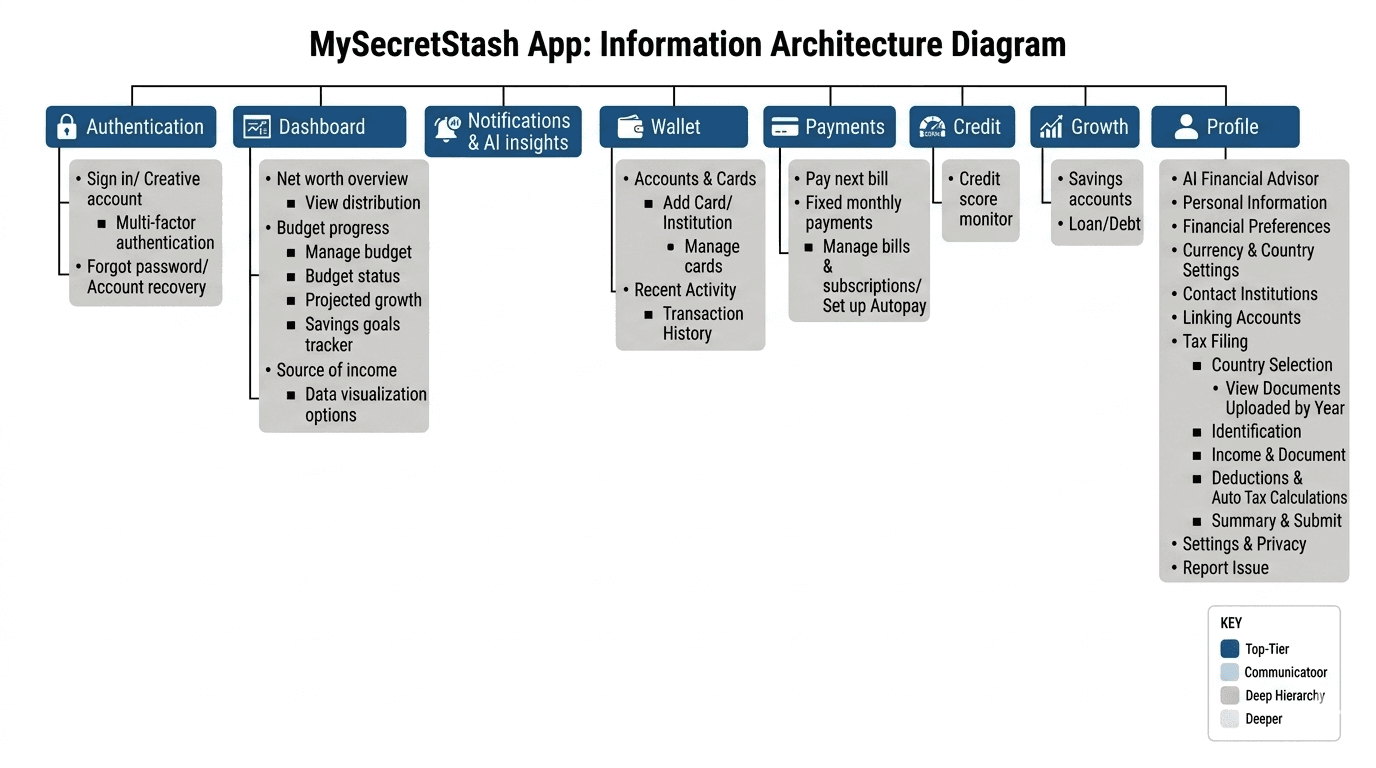
Information Architecture
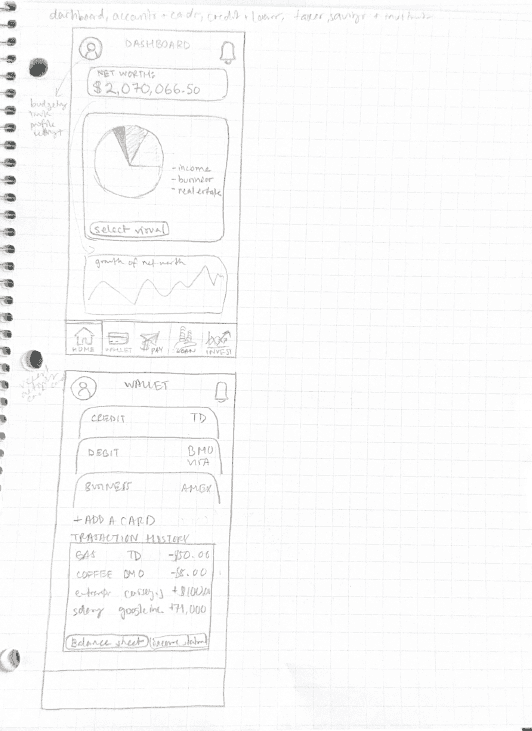
BRAINSTORM
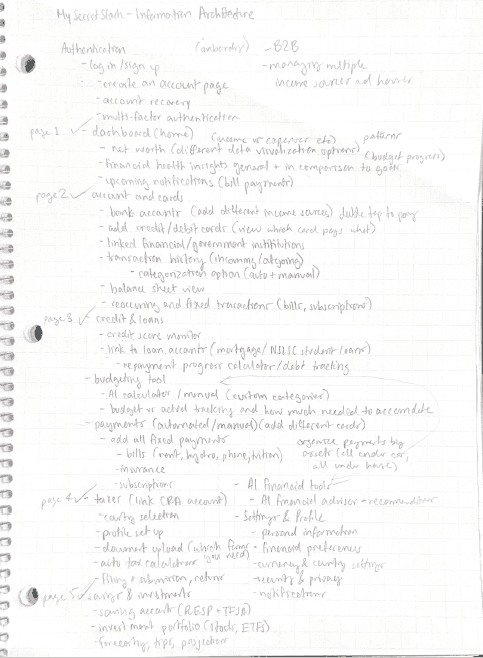
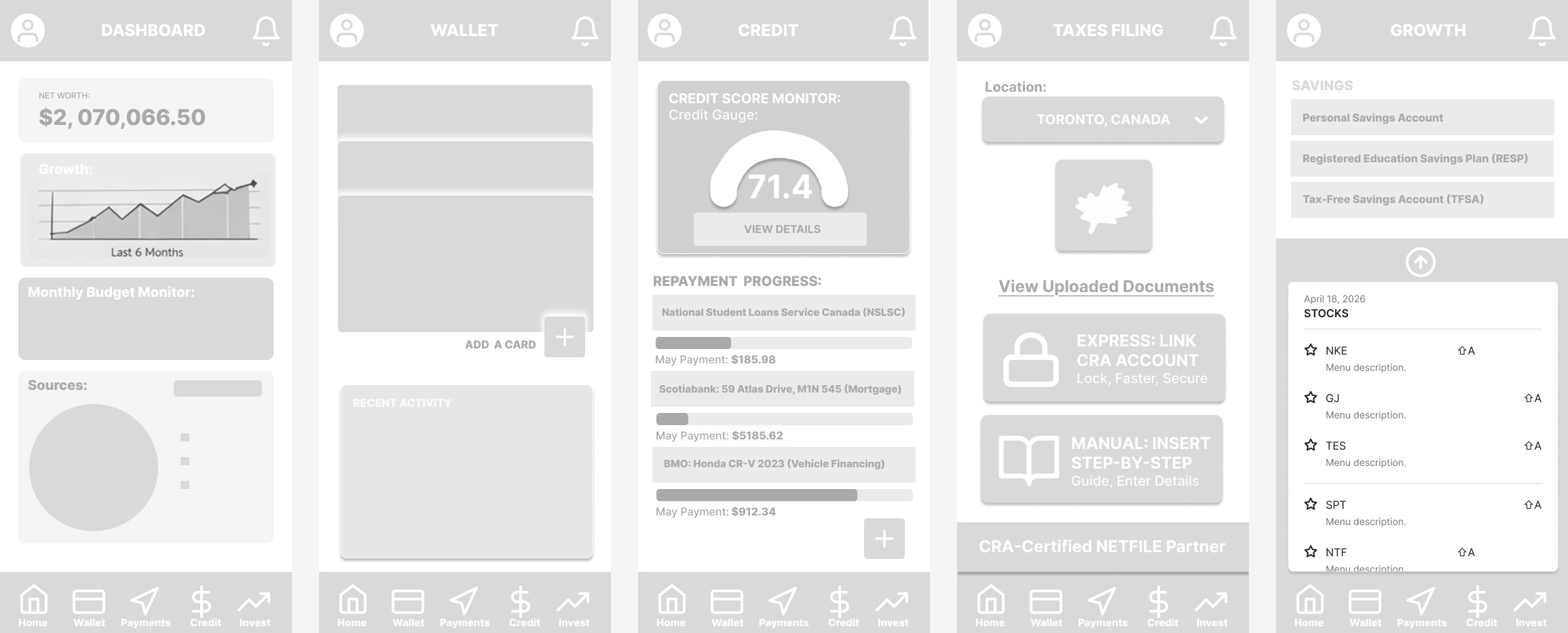
Wireframing
Key UX Decisions
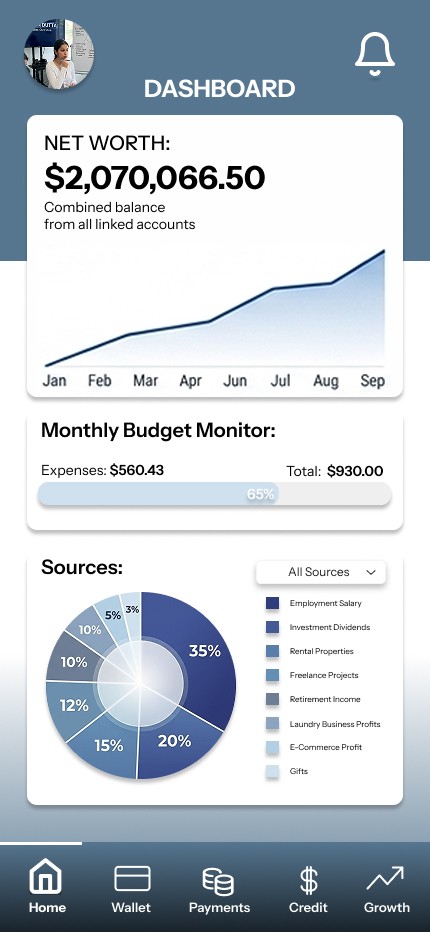
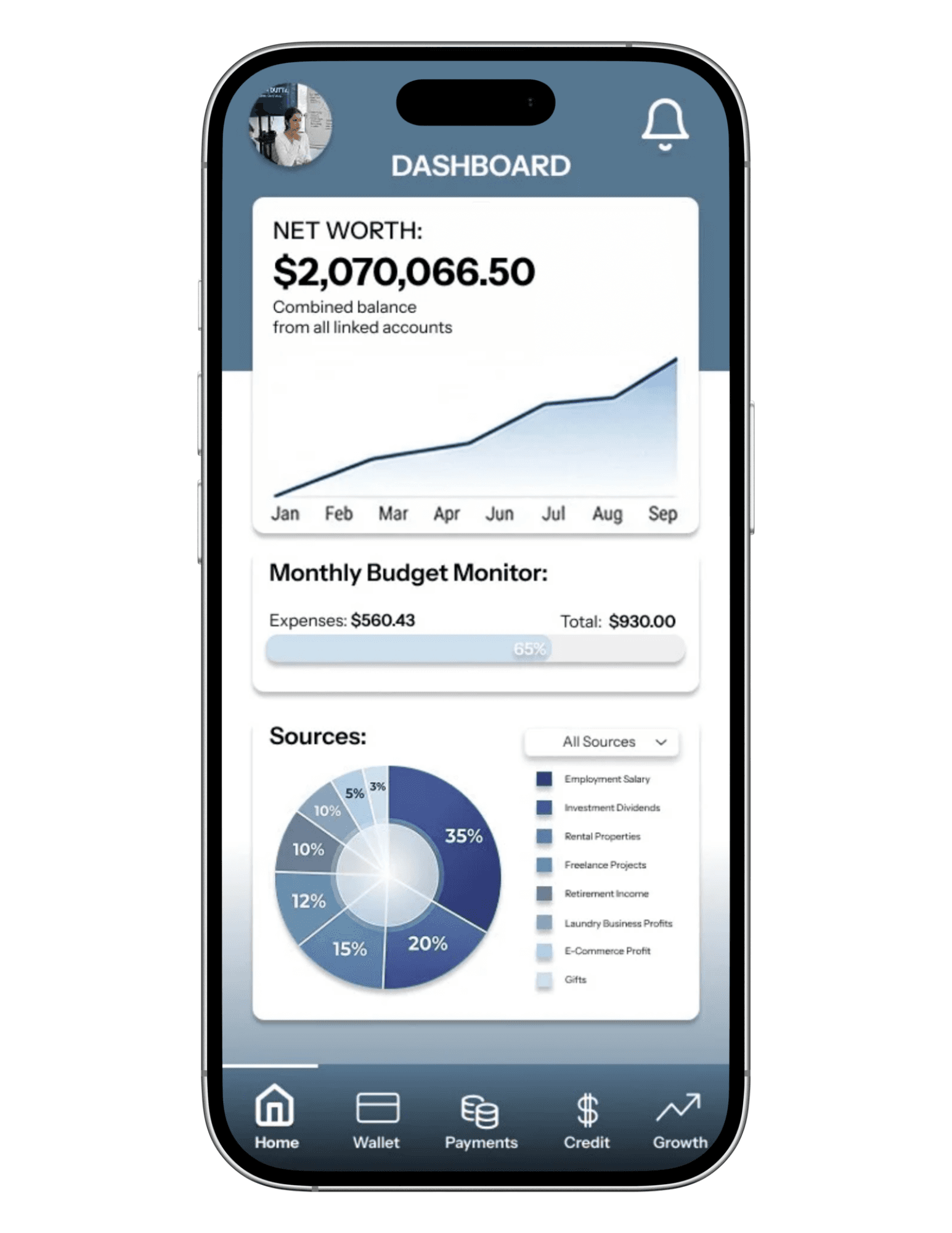
Dashboard
Designed to give users immediate visibility into:
Net worth
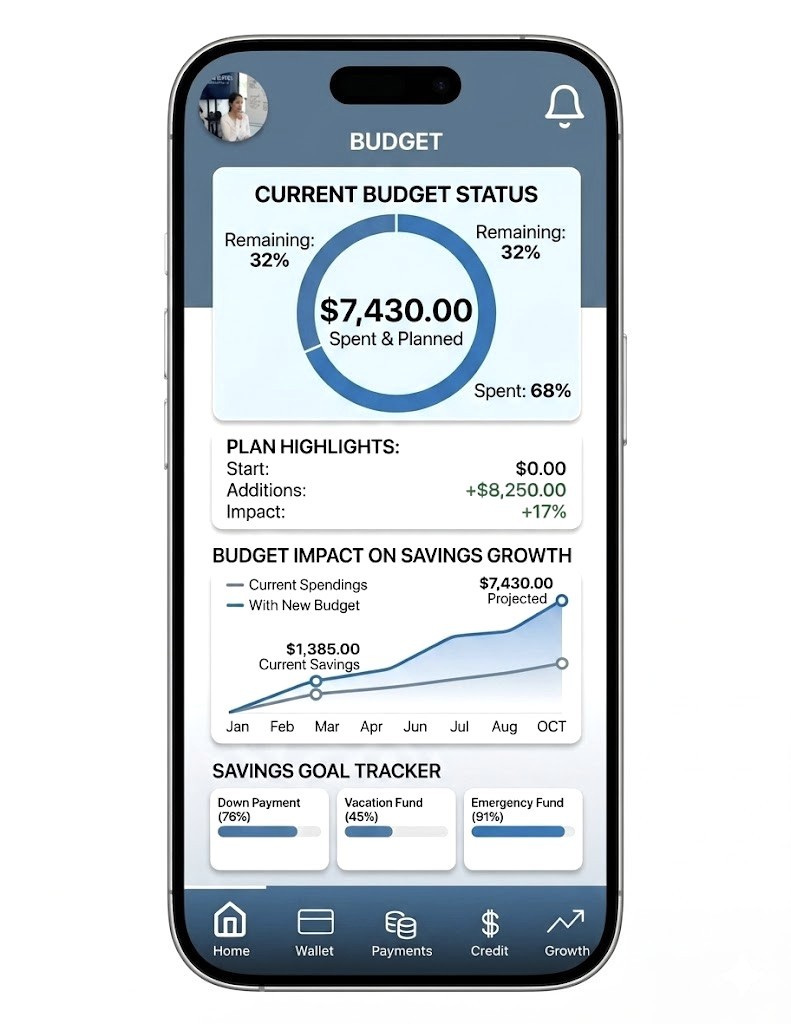
Budget progress
Spending insights
Income sources
Payments
Created a fixed-payment tracking system to reduce missed bills using:
Due-date reminders
Paid/unpaid indicators
Recurring payment organization
Tax Filing
Simplified taxes into guided step-by-step workflows to reduce overwhelm and improve completion rates.
Constraints & Tradeoffs
A major challenge was balancing large amounts of financial information without overwhelming users.
To solve this, I used:
Modular card layouts
Progressive disclosure
Simplified navigation
Visual hierarchy
The visual design focused on creating a calm, trustworthy, and modern fintech experience.
Design Choices
Muted blue tones to communicate security and trust
Large financial metrics for quick scanning
Card-based layouts for organization
Minimal visual clutter for readability
Accessibility Considerations
I applied WCAG-informed design practices including:
High contrast text
Large touch targets
Clear typography hierarchy
Color-independent status indicators
Step-based forms to reduce cognitive load
The bottom navigation was also optimized for thumb-friendly mobile interactions.
Engineer Consultation
Although this was a personal project, I researched technical constraints commonly faced by fintech products.
Key considerations included:
Open banking integrations
Data privacy regulations
Authentication requirements
API limitations
Financial encryption standards
Real-time transaction syncing
DESIGN
High Fidelity
VALIDATE
Prototype Iteration
Key Testing Methodologies
5-Second Recall Test: Validated visual hierarchy. 85% of users successfully identified their total debt balance and upcoming payments within five seconds.
Expectation Mapping: Users pointed to static elements and predicted the outcome. This revealed a need to refine the "Stash" icon to better align with a "security vault" metaphor.
Comprehension Analysis: Tested financial microcopy. I replaced jargon like "Principal" with "Amount Owed" after finding that simplified language increased user confidence by 40%.
Results & Iteration
These tests proved that while the "navy and minimalist" aesthetic felt professional, the initial dashboard was too crowded. I pivoted to progressive disclosure, hiding granular debt details to reduce cognitive load. This data-driven approach ensured the design felt empowering rather than overwhelming, securing a foundation of trust before a single line of code was written.
Impact & Reflection
This project taught me:
Simplicity builds trust in financial products
Clear financial visibility reduces stress
Accessibility improves usability for all users
Iteration is critical for refining complex experiences
Future Improvements
As I continued developing My Secret Stash, I would explore:
AI-powered financial insights
Personalized budgeting recommendations
Smart subscription management
Advanced accessibility features
B2B features for enterprises
Multi-device experiences
MySecretStash helped me understand how thoughtful UX design can empower users to feel more confident and in control of their finances.
Before coding or high-fidelity styling, I conducted evaluative research on static wireframes to ensure the underlying logic and information architecture were sound. By stripping away visual distractions, I focused purely on user trust and cognitive clarity which are essential pillars for a fintech application.